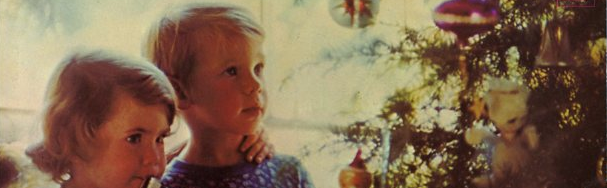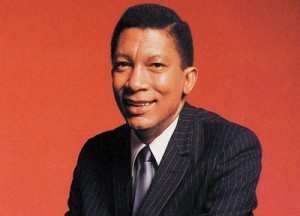
"The Very Best of Burl Ives Christmas" album cover

The Very Best Of Burl Ives Christmas

Why has it taken this long to bring Burl Ives into our Classic Christmas line-up? This year, the 50th anniversary of the televised broadcast of Rudolph The Red-Nosed Reindeer, it seemed like the right thing to do. This beloved voice of Sam the Snowman surely has a place in our heart.

This collection, The Very Best of Burl Ives Christmas, presents carols out of the family Christmas songbook– the ones we’re used to singing along to, and others that tend to be left behind on commercial recordings like these.

* * * * *

As if performing an actual concert in our living room, the album opens with a full overture featuring a taste of Burl’s greatest holiday hit, “A Holly Jolly Christmas.” Then, we dig into the meat of the matter.

The producers of the album know what the people want. Rudolph! We start there and then move onto another all-time favorite, “White Christmas.”

After being wrapped in a cloak of bestselling Christmas comfort, Burl turns a corner and reminds us that the best songs aren’t necessarily the ones that Hollywood told us to love, nor the ones with repetitive melodies poised to become pesky earworms.

"O' Little Town Of Bethlehem" sheet music

There’s “O’ Little Town Of Bethlehem,” a song we know but one that tends to take a back seat to more prominent commercial hits. This arrangement is quite simple. Close your eyes and picture Burl Ives performing a basic recital at the front of a chapel… that’s this track. It’s perfect.

Arrangements like these are essential to our Christmas music collections. They strip away the flare and splash that overly-produced albums tend to stir in (here’s Julie Andrews to show you what I mean), leaving us to appreciate the composition itself and the beauty of the singer’s voice– which is really why we bought the album in the first place. In this instance, you could easily swap Ives’ voice for, say, a clarinet or English Horn, and you’d probably enjoy the track all the same.

That’s the charm of this album. Burl is the star without being a star. He’s just singing for you, like your grandpa would if you could still fit on his lap.

Another song that always steals my heart is “It Came Upon A Midnight Clear.” I don’t think I fully appreciated it until I stumbled upon Rosemary Clooney’s version in her White Christmas album. I love a song with a melody line that dances around the musical scale a little bit before repeating the same note twice. “It Came Upon A Midnight Clear” does that, though not to the same extent as our old favorite, “Stardust.”
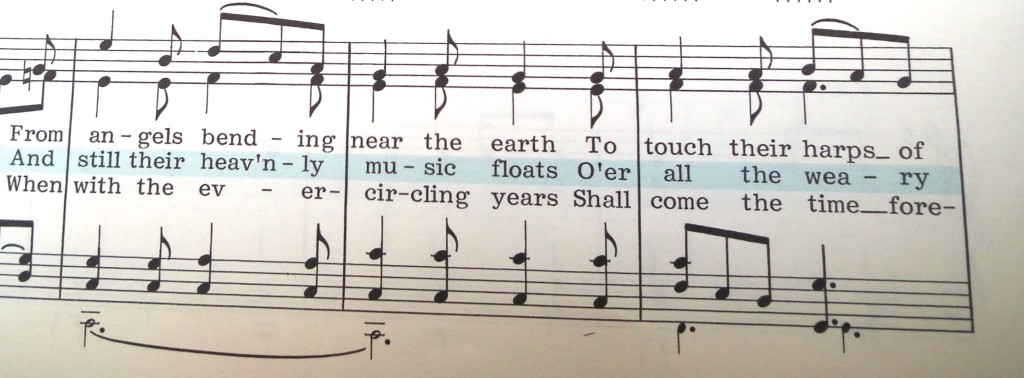
"It Came Upon A Midnight Clear" sheet music

I Heard The Bells On Christmas Day” is a unique selection– one I don’t tend to find on standard 15-track Christmas albums like this. Ives’ energy subtly ebbs and flows with each passage. The lyrics are an adaptation of a poem by Henry Wadsworth Longfellow, written as a personal message of hope following the death of his wife and the outbreak of the Civil War.

If there’s one track I’m prone to reach over and skip, it’s “Twelve Days Of Christmas.” Yes, we go through all twelve days, all twelve sets of gifts, twelve times. Four long minutes. Oy! The link here is not the same version found on the CD, which is simply comprised of Ives and a solo guitar.

But the show’s not over until we hear the song everybody wants to hear. The grand finale. The big finish. The “ding dong ding…”

Have A Holly Jolly Christmas.”

The entire album is full of delightful arrangements where the orchestra and chorus add a layer of warmth to Burl Ives’ simple presentation. If it becomes a part of your collection, it’s sure to become a family favorite.

Complete Track List

1. Overture and A Holly Jolly Christmas
2. Rudolph The Red-Nosed Reindeer
3. White Christmas
4. Oh, Little Town Of Bethlehem
5. Silver Bells
6. Twelve Days Of Christmas
7. Santa Claus Is Coming To Town
8. The Little Drummer Boy
9. What Child Is This?
10. Silver and Gold
11. It Came Upon A Midnight Clear
12. Winter Wonderland
13. I Heard the Bells On Christmas Day
14. Silent Night
15. A Holly Jolly Christmas
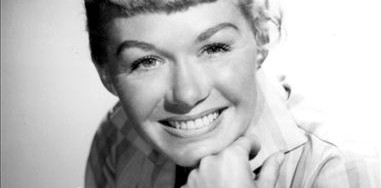
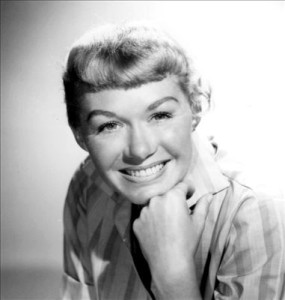
June Christy

June Christy

June ChristyMarch 22, 1945.

“I can’t remember my own birthday, but I’ll never forget that date.”

June Christy knew her life would never be the same. It was on that day that she officially joined Stan Kenton’s Orchestra as the girl to replace the very popular Anita O’Day.

Christy was born Shirley Luster on November 20, 1925 in Springfield, Illinois. By her teenage years, she’d already found herself singing alongside dance bands in Decatur, IL.

Her placement at the forefront of Kenton’s orchestra was the result of wishful thinking, careful planning, and calculated plotting.

She’d heard that Kenton was headed to Chicago and, more importantly, he still hadn’t found a replacement for O’Day. Since she knew he was signed with General Artists Corporation, she headed down to their Chicago headquarters and waited in the lobby hoping he might walk in.

As luck would have it, he did stop into GAC, and she seized the opportunity to hand him a demo of her voice. According to Christy, Kenton took a listen and invited her to sing along with them for a few days, just to try it out.

“A few days” ultimately turned into five years.

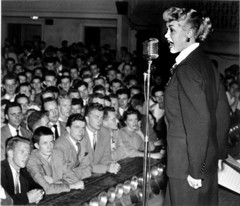
June Christy on stage

Heart and Soul

As the new voice of Stan Kenton’s Orchestra, many hoped June Christy would bring a softer, more tender style to a band that was criticized for being too stiff and intellectual. Anita O’Day herself once said, “the band is so cerebral, you can’t dance to it.”

Despite the desire for a refreshing contrast, many hear similarities between O’Day and Christy after all. Here’s O’Day singing “The Man I Love” and Christy singing “Sweet Lorraine” — take a listen and see what you think.

Some also criticized Christy for being cold, citing her lack of vibrato as one trait that left something to be desired in vocal personality. This was one criticism with which Christy staunchly disagreed.

“Warmth is the one quality I do think I have. Gosh, if I don’t have that, I might as well give up,” she said in 1956*.

Early Success

“Tampico” was Kenton and Christy’s #1 hit. Following that was Kenton’s own arrangement of “It’s Been A Long Long Time.”

Kenton was also the mastermind of the song called “June Christy,” whereupon Christy, ironically, doesn’t sing any actual words. Adding to that irony, the scat — traditionally known to be improvised singing style — was all pre-written. What more can we expect from a band not known to be very loosey-goosey?

Something Old, Something New

Almost as soon as Christy signed on with Kenton’s orchestra (March 1945), she began laying the groundwork for a solo career, recording under her own name for Capitol Records (December 1945). She collaborated with Kenton arranger Pete Rugolo, mostly working together on singles from 1949-1955.

Christy’s sound evolved with the times, but she never earned certain accolades like “groundbreaking” or “revolutionary.” She went from “straight-laced big band girl singer” to “straight-laced solo cool jazz singer” (see below, where we reflect on this point just a bit).

Her singles and albums weren’t anticipated to be popularly received at the time, but with the advent of “concept albums,” like Sinatra’s Only the Lonely and Swing Along With Me, there was new-found demand for records that could convey a narrative arc from start to finish.

For Christy, that meant albums like Something Cool and Fair and Warmer were born, as well as two that were orchestrated by her husband, Bob Cooper, whom she met when they were both performing with Kenton’s orchestra. Those albums were June’s Got Rhythm and Ballads For Night People.

To hear this turnabout in style, check out:

 “Get Happy” from 1946 (w/ Kenton)  and  “Get Happy” from 1953

And here’s a version of “Willow Weep For Me” from 1946 (w/ Kenton). When we fast-forward 20 years and remove the big band flares, we get the Cooper orchestration of “Willow Weep For Me” from 1965.

To shake things up a little bit, Christy reinvigorated some traditionally slower songs with upbeat and swinging arrangements. “I Want To Be Happy” is just one example (here’s the Doris Day version of the song to give you a sense of what previous arrangements sounded like).

Eventually, the record industry shifted away from this “intimate swing” musical style. As demand decreased, Christy found herself among big names (like Sinatra) trying to find other work. By the mid-1960s, Christy was reported to suffer greatly from anxiety, and scotch was her medication of choice. She died on June 21, 1990 at the age of 64.

A Note from Grandma Cyd

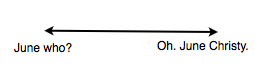
The announcement of June Christy as our featured artist came after a wee bit of suspenseful build-up on HPZ social media. Ultimately, I fully expected public reaction to the final unveiling to measure only conservatively on the “Excite-O-Meter.”

Allow me to illustrate. Perhaps your reaction to June Christy ranges from…

June Christy excite-o-meter 1

And to put this in relative terms:

June Christy excite-o-meter 2

If you feel this way, that is okay!

You see, June Christy is so… normal. Mainstream. Predictable. Would you go so far as to say “bland”?

After a listener suggested that June Christy be a featured artist on HPZ, I tried pretty hard to find the right words to explain why she was, in fact, a worthy choice. I came up with nothing.

When at a loss for words to articulate what’s special about an artist, I sometimes turn to jazz critics who might offer perspective. This time, I turned to one of the most thorough reference books in my personal library, and I must say… I walked a way feeling a bit vindicated.

The author writes:

“I doubt there’s anyone reading this who has spent more time listening to Christy than I have… Yet I confess that all my intense concentration has led me to naught. Asked to explain why she’s so good, and why her recordings are so worthy of attention, I still can’t provide an easy answer.”

 So here we sit. Our lack of eloquence is in no way a reflection on her worthiness as an artist. For me, it’s the smoky timbre of her voice that draws me in. If you’d asked me four years ago, I would have told you that June Christy is barely on my radar. But recently falling in love with Johnny Hartman’s style turned me into a likely fan of the late Christy sound.

The great thing about June Christy is that she has something to offer for everybody, whether you prefer the big band hits of the mid-1940s or the sultry, jazzier sounds of the mid- to late-1950s.

Pick a spot in her career, dig in, and enjoy!


=========================================================

* Biographical credit: Will Friedwald, A Biographical Guide to the Great Jazz and Pop Singers (2010)

The Sound of Christmas, Vol. 2

The Sound of Christmas-Vol. 2

As I combed through my record collection to find another holiday album to toss into the mix of reviews and recommendations, I realized I’ve come to a point where I can no longer identify the origins of my “new” additions. I have no idea where I got The Sound of Christmas — Vol. 2, but I know it must have been from a resale shop or a closeout bin somewhere. When I pulled it off my shelf, I found two other unrelated Christmas albums shoved inside the sleeve. A Christmas miracle!

The most delightful thing about The Sound of Christmas – Vol. 2 is the variety of artists on it and the way in which the track list takes you off the beaten path.

Yes, there are the well-known classic recordings like Nat King Cole’s “Deck the Halls” and — one of my favorites — Bing Crosby’s “What Child Is This/Holly and the Ivy” medley (also available on Bing Crosby’s Christmas Classics). But I did not expect to hear the likes of Tennessee Ernie Ford and Glen Campbell.

Because there are a multitude of other places to find the predictable tracks, let me list the harder-to-find gems that make this album unique:

2. “The Virgin’s Slumber Song” by Tennessee Ernie Ford

This is the second track on the album, preceded only by a medley of the traditional Christmas carols you’d expect on a collection like this. Changing pace ever so slightly early on — with Ford’s deep baritone voice backed up by a rich, beautiful choir near the top of Side A — should have been my first clue that this record wouldn’t be as ho-hum as I thought it would be.

My limited research suggests this is probably the hardest-to-find track on the album. Tennessee Ernie Ford has done some Christmas albums but few appear to be available with this song. My search to bring you an MP3 or YouTube video was unsuccessful.

7. “The Christmas Waltz” by Nancy Wilson

This is not an uncommon recording. Nancy Wilson’s rendition of “The Christmas Waltz” can be found in other places, including Ultimate Christmas Cocktails.  In this collection, it kicks off the B-side of the record and altogether hits the spot when nestled between The Hollywood Pops Orchestra’s version of “Caroling Caroling” and The Lettermen’s “Silent Night.”

8. “Silent Night” by The Lettermen

An oft-overlooked all-male quartet, The Lettermen are one of the best groups to enjoy over the holidays. Their dulcet notes and tight harmonies warm up any room. You’ll surely enjoy this arrangement of “Silent Night.”

9. “Christmas Is For Children” by Glen Campbell

This was the track that surprised me the most. With my record player spinning across the room, I first mistook the singer as Johnny Mathis (my turntable sometimes spins at a slower speed than it should, making Johnny Mathis sound like he has a cold or, as it turns out, like Glen Campbell). Quite different from “Galveston” and other classic Campbell country tunes, “Christmas Is For Children” is a sweet sentimental song, and Glen delivers it with grace.

* * * * * *

If operatic carols are your style, you might also enjoy “Ave Maria” by Franco Corelli — the Johann Sebastian Bach/Charles Gounod “Ave Maria,” to be specific.

Sprinkled throughout the album are tracks by the generically-named Hollywood Pops Orchestra, accompanied by a kitschy assortment of singers who sometimes sound quite similar to the Ray Charles Singers (to give you an idea). All the Pops numbers are arranged by William Loose and serve as the pleasant musical ribbon to tie this collection together.

* * * * * *

Want your own copy? This record doesn’t appear to have been re-released digitally or otherwise. If you specifically want everything on this record, including the Hollywood Pops Orchestra selections, you can purchase vinyl-to-digital dubs here. Pre-owned LPs are available for purchase here and here.

Otherwise, I recommend taking a look at the complete track list (below) and use your search engine to find alternate releases of the tracks you’re interested in.

Complete Track List

SIDE ONE
1. “Christmas Colors” (Medley) by The Hollywood Pops Orchestra
2. “The Virgin’s Slumber Song” by Tennessee Ernie Ford
3. “The Christmas Song” by Peggy Lee
4. “Deck the Halls” by Nat King Cole
5. “What Child Is This?” and “The Holly and the Ivy” by Bing Crosby
6. Caroling, Caroling by The Hollywood Pops Orchestra

SIDE TWO
1. “The Christmas Waltz” by Nancy Wilson
2. “Silent Night” by The Lettermen
3. “Christmas Is For Children” by Glen Campbell
4. “A Dream Of Toyland” by The Hollywood Pops Orchestra
5. “Ave Maria” by Franco Corelli
6. God Rest Ye Merry, Gentlemen by Nat King Cole/
We Wish You A Merry Christmas by The Hollywood Pops Orchestra

Johnny Hartman

Johnny Hartman: The Greatest Singer You Never Heard

10.8.13
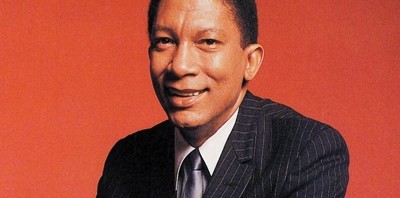
Johnny HartmanOne of my favorite things about hosting The Heavy Petting Zoo is having the opportunity to introduce perfect strangers to fabulous artists they may not have gotten to know before. And I always take great pleasure in bringing the smooth baritone sounds of Johnny Hartman to you nearly every week. His voice is the perfect backdrop to a cozy Saturday night.
I often wonder– if not for my chance discovery of Hartman upon the recommendation of a friend, where else might I have heard him? I’m not convinced I would have!

It’s not uncommon for me to get the ol’ *blink blink* reaction when I mention his name in conversation. In fact, the only person I know who recognized it at first mention was the wife of WSUM’s General Manager. She’d seen The Bridges of Madison County, where Hartman is featured prominently in the soundtrack.

When a singer or songwriter goes under-appreciated, I tend to blame society and its questionable taste in music. With Hartman, this approach won’t do. He never had much of a chance to become well known in the first place. For this, we can mostly blame the record labels… and bad timing.

FROM THE TOP

Hartman’s first forays into singing were at his Chicago church choir — the same choir, in fact, as Ruth Lee Jones. Or, as we know her, Dinah Washington. He polished his voice through singing lessons and involvement in the school glee club.

He also honed his craft by studying the sounds of Billy Eckstine, Frank Sinatra, and Nat King Cole. His career got a jolt when he won the chance to sing with Earl Hines and His Orchestra as a teenager.

SUBSTANCE & STYLE

When you hear Johnny Hartman on The Zoo, chances are he’ll be singing a ballad. This was his specialty and his preference. According to biographers*, he loved love songs. The reason he’s a favorite on this show is because he knew how to deliver love songs with authenticity– saccharine-free– his rich voice hitting notes you never knew could resonate that way before.

The best musicians and vocalists are the ones who don’t simply sing or perform– they actively study the music. This is how Sinatra perfected his delivery (diction is key!), and Hartman knew it. He once observed, “I hear singers break up sentences in the wrong places. Phrasing is like talking. I think you should sing like you talk. If you do that, the song comes out right*.”

A composer friend of mine once taught me this lesson, and it ruined the musical RENT for me. Nevertheless, I keep it in mind as a measurement for quality and true musicianship.

JAZZ SINGER

I always thought of Hartman as a great “gateway jazz singer.” That is, if you’re not into jazz, listen to this guy just to get your toes wet. Not all of his songs are jazzy, but a good number of them leave you clasping for a glass of bourbon and imagining yourself tucked into a smoky** corner of the Blue Note.

But Johnny Hartman aspired to be an “all-around singer.” Not just a “crooner.” And certainly not a “jazz singer” (whoops). To be a “jazz singer” at the time would mean being painted into a corner, so to speak. You wouldn’t be hired for gigs at the major hotel ballrooms, supper clubs, and nightclubs. And those were exactly the things Hartman wanted.

Despite his aspirations, Hartman’s career saw another fate, and along the way, he ironically found himself recording alongside one of the biggest jazz greats of all time.

JOHN & JOHNNY

To my knowledge, Johnny Hartman is the only vocalist ever to have recorded with John Coltrane. Their collaboration turned into the album known simply as John Coltrane and Johnny Hartman. Amazingly, it was recorded in a single session on March 7, 1963.

You may have heard their rendition of “Lush Life” on The Zoo. Here’s how it was born, in Johnny Hartman’s own words*:

“As we were driving out, listening to the car radio, we heard Nat Cole sing ‘Lush Life.’ I said, ‘That is a fantastic song’ and I started singing it in the car, although I didn’t know all the words.”

It turned out Coltrane already knew the song itself, so putting it on tape was a matter of tracking down the lyrics. Once they did, they recorded the track in a single take. Just one take!

Click here to hear the single take of “Lush Life.”

WHEEL OF MISFORTUNE

Of all the artists featured on The Zoo, Johnny Hartman is the only one I listen to and actively mourn the fact that more people haven’t had the chance to get to know him. I’ve long wondered why his wasn’t a household name alongside other vocalists of his time.

It wasn’t for lack of trying.

Hoping to ride the coattails of Nat King Cole and Billy Eckstine, two African Americans who’d already made it into the mainstream, Hartman signed with the RCA label in 1951. They committed to Hartman for one year and 16 songs*.

Among those songs: “Wheel Of Fortune,” recorded on August 6, 1951. Unfortunately, Kay Starr’s recording of that same song (by Capitol Records) wasn’t too far behind. When it was released in February 1952, it became a major hit and overshadowed that of Hartman’s. Some blame RCA for the failure, alleging it could have done more to promote Hartman before Starr had a chance to outshine him.

A number of missteps by RCA and others in charge of managing Hartman’s career have been blamed for the fact that he remained relatively unnoticed in the grand scheme of American music history. He was more popular in Australia than he was here.

A personal observation: It took a heckuva lot of research to find sufficient information on Hartman before I could bring you this article. Even the so-called ‘definitive’ reference books overlook him.

GRANDMA CYD’S “HART-” THROB

Johnny Hartman Collection

It’s never too late to get to know Johnny Hartman and explore his music. Among his other RCA tracks were “Out of the Night” and the catchy “Worry Bird.” Both are available on an excellent compilation called The Johnny Hartman Collection (1947-1972). It’s a great way to scratch the surface of Hartman’s career without diving deeply into any one album.

Some tracks to get you started:

– Worry Bird
The End Of A Love Affair
Lush Life
My Ship
– The Very Thought Of You
Unforgettable
If I Had You
I Cover the Waterfront
– On A Clear Day (You Can See Forever)

If it weren’t for word of mouth, I would never have known to bring Johnny Hartman to you. I hope you’ll spread the word about him and keep this ‘wheel of fortune’ spinning ’round and around!

=====================================================

* Biographical credit: Will Friedwald, A Biographical Guide to the Great Jazz and Pop Singers (2010)
** You can’t smoke at the Blue Note in New York City anymore, for what it’s worth.

=====================================================

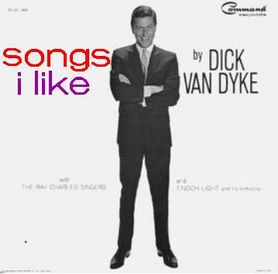
“Songs I Like” by Dick Van Dyke

1.27.13

Longtime listeners of The Heavy Petting Zoo know very well the amount of admiration I have for Dick Van Dyke. Some might even recall the 48-hour weekend jaunt my mom and I took to Fort Worth, Texas just to see Dick and Jerry Van Dyke in a live on-stage performance of “The Sunshine Boys.” (Thanks again to Special K for hosting HPZ that weekend!)

Dick and Jerry Van Dyke take their bows -- "The Sunshine Boys" -- 11.10.11

Dick and Jerry Van Dyke take their bows — “The Sunshine Boys” — 9.10.11

Having had an online home for my radio show since 2009, one might wonder, “Why haven’t you written about Dick Van Dyke yet?”  The obvious answer is, “Dick Van Dyke was not a legendary artist of the 1930s-1950s.” But the truth is HPZ occasionally dips into the 1960s, and Dick Van Dyke is undoubtedly one of the biggest icons of the decade.

As he accepts his Lifetime Achievement Award from the Screen Actors Guild tonight, I thought it would be appropriate to highlight a favorite from my record collection: Songs I Like by Dick Van Dyke.

Screen Shot 2013-01-27 at 12.36.12 PM

Some of Dick Van Dyke’s career milestones seem to have a strange synchronicity with John F. Kennedy’s life. For example, the pilot episode of The Dick Van Dyke Show was shot on JFK’s Inauguration Day (January 21, 1961). And this album, Songs I Like, was recorded the same night as JFK’s assassination (November 22, 1963). Van Dyke said in an interview with TV Land that it was all they could do to get through the recording session as it had been an emotional day for everybody.

Despite knowing the historical context of the recording, it’s impossible to detect that Van Dyke and his back-up singers/musicians were distraught at the time. The Ray Charles Singers and Enoch Light and His Orchestra provide the strong musical backbone behind Dick Van Dyke’s lead vocals.  The album is full of upbeat and jazzy renditions of familiar songs that generally follow this formula:

(Dick Van Dyke + (Ray Charles vocal arrangements + Lew Davies instrumental arrangements)) x 1963 =
delightfully perky 1960s kitsch

If you’re fortunate enough to get your hands on the original LP release, be sure to take a look at the liner notes inside the album. Comedy legend and The Dick Van Dyke Show creator Carl Reiner had this to say:

“I feel that Mr. Van Dyke’s voice belongs in the charmed circle of nonsinging singers. I include in this group Louis Armstrong, Gene Kelly, and the non-voice singer of them all, Fred Astaire.” 

Indeed, you can easily spot a “nonsinging singer” on any tune that requires that “singer” to sustain a note for more than a beat or two. It’s easy for a novice to slip off the head of a note when asked to hang onto it for too long. Ballads can be particularly troublesome for “nonsinging singers.”

A few tracks on this album bring this to light for Van Dyke, who himself waves off any overly doting compliments about his singing. Simply put: He sings because he has fun doing it; any expectations set beyond that are entirely your own.

The album itself is 90% high-energy and the “nonsinging singer” matter is a non-issue. Van Dyke’s talent and knack for providing a lighthearted comedic touch is evident throughout this uplifting collection.

Among the tracks, you’ll find a jazz-style arrangement of “Put On A Happy Face,” one of Van Dyke’s most famous songs courtesy of his role in Bye Bye, Birdie. In place of an instrumental dance sequence (which doesn’t translate well through the record player), we’re treated to guitar and saxophone improv solos. Perhaps this is a nod to Van Dyke’s love of progressive jazz, as described in the album’s liner notes.

* * * *

Until relatively recently, this album only existed in its original form– a Command Records LP release from 1963. I found my copy on the internet from a seller who, in my opinion, undervalued it. But the seller’s lack of appreciation was my gain. It’s one of the best $6.00 purchases I ever made.

The 2011 release of Dick Van Dyke’s autobiography, My Lucky Life In and Out of Show Business, brought with it renewed popular interest in Van Dyke’s career. Now, you can find digital releases of Songs I Like on iTunes and elsewhere (coincidentally retailing for $6.00).

If you’ve got 35 minutes at your disposal, give this album a whirl!

Recommended tracks for the dubious listener:
“Nice Work If You Can Get It”

“Put On A Happy Face”

“Ain’t We Got Fun”

“They All Laughed”

“I’ve Got A Crush On You”