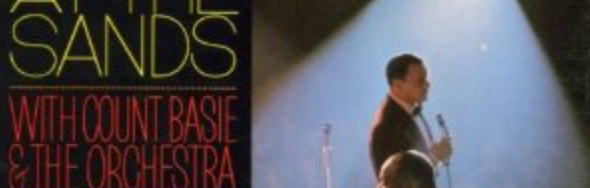
Sinatra At the Sands cover

5 Sinatra Songs You Gotta Hear: “Where Or When”

2. “Where or When” (click title to listen)
From Sinatra at the Sands (Reprise, 1966)

As a general principle, I detest live albums. I see the reason for them, and sometimes they become a necessary evil because it’s the only place you can get a particular artist doing a particular song, or a particular version of a song. But as someone who’s been to a lot of concerts, there’s something about the experience that can’t be captured on record (or, today, on Facebook videos or Instagram shots), and a lot of live albums seem to taunt me, as if to say, “You weren’t there.”

Sinatra at the Sands, however, is just as essential as any studio recording Frank ever did, and, in my humble opinion, the best live album ever. That’s based not so much on the strength of Frank’s performance (which, recorded shortly after his 50th birthday, is damn good), but the playing of Count Basie and his orchestra behind Frank, as arranged and conducted by Quincy Jones.

If you think about live albums, aside from the “you weren’t there” rub of it all, is the fact that—particularly with rock bands—you’re not working with producers that can coax the best performances out of you. Really, you’re not working with dynamics of any kind. It’s just about making a noise and feeding off the crowd’s energy.

That’s not how it was with real players. Think of the equipment this must have been recorded on. And listen to the clarity with which you can pick out different instruments and parts in a friggin’ live orchestra in a Vegas casino showroom. It’s the mark of real players, and in addition to this album boasting the better-than-the-album version of “I’ve Got You Under My Skin,” it’s got a far and away ultimate version in “Where or When.”

Sinatra sounds so at ease but still so in command in his performance—it’s the sound of a guy who’s sung this song a thousand times and knows it inside and out. But with the padding that this band has set for him, he’s loving rolling around in the sack with the tune again. You can hear him smile on a few lines.

I’m irritated I wasn’t alive to be in the audience for this one. But the recording of this is so clear and intimate, I can almost imagine I was.

This post was authored by Paul Snyder.
Ring-A-Ding Ding! cover

5 Sinatra Songs You Gotta Hear: “You’d Be So Easy To Love”

3. “You’d Be So Easy To Love”
(click title to listen)
From Ring-a-Ding-Ding! (Reprise, 1961)

As many torch songs and albums as Frank commandeered throughout the 1950s, it’s kind of interesting that one of the most heartbreaking tracks he ever recorded (for me, at least) falls dead center on a party album, Ring-a-Ding-Ding! It’s the debut release on his own Reprise Records label.

It’s a charming album, but it’s also goofy as hell. Whenever “The Coffee Song” comes up on my iPod during a shuffle, I always spend the duration of the song wondering if it’s actually fun or just flat out stupid, but that doesn’t change the fact that I elected to put the song on my iPod in the first place, and I’m singing along in my very bad “swaggery Frank” impression the whole time.

A few years ago, there was a deluxe edition of the album released that included this long outtake of “Have You Met Miss Jones?” It had a very mellow, almost torch-y arrangement to it. And during the recording, you can hear Frank kind of admonishing the assembled team in the studio (“Maybe you got the wrong arrangement? … This sounds like the wrong album. This is for an album called Ring-a-Ding-Ding!?”)

Certainly the version of “You’d Be So Easy To Love” has a little more pep in its step, but it’s still thoroughly heartbreaking (Cole Porter knew how to write those kinds of tunes), and it seems out of place following things like “Let’s Face the Music and Dance” and the bombastic title track. But it’s also an inspired inclusion, because this track alone gives the album its beauty.

The first minute is autumnal, the second minute gives way to a bit more swing and, er, ring-a-ding-ding, but still, the way Frank’s voice turns that “it does seem a shame that you can’t see your fuuuuuuuuuture with me” bit. Amazing.

Such regret and disappointment in the way he says “future.” The complete antithesis of ring-a-ding-ding, no matter what the music says. But it works brilliantly.

This post was authored by Paul Snyder.
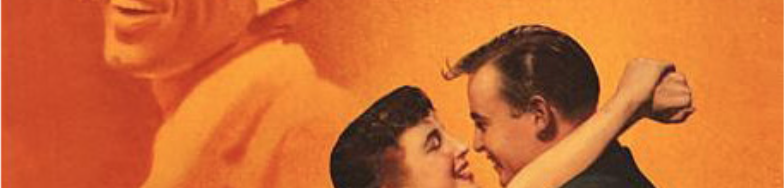
Songs For Swingin' Lovers cover

5 Sinatra Songs You Gotta Hear: “You’re Getting To Be A Habit With Me”

4. “You’re Getting To Be a Habit With Me” (click title to listen)
From Songs For Swingin’ Lovers! (Capitol, 1956)

If hipsters were more into Sinatra (and soon they will be, I promise you), Songs For Swingin’ Lovers! would be the eye-roll “Oh everyone picks that one” album that they use to dismiss your “obvious” musical preferences.

You know, like if “High Fidelity” had been set in the late 1950s, Jack Black would give John Cusack a lot of crap for picking that album as one of his favorite Sinatra records or for putting “I’ve Got You Under My Skin” on the store hi-fi.

It’s one of the touchstone albums for Sinatra, and I think it’s because this is where the refined, king-of-the-world vocal really cemented into place. There were hints that it was coming on the three Capitol albums released before this, but this album — from top to bottom — is just great tunes by a guy who absolutely knows he’s the boss and there’s no one who can touch him.

Think about that in the context of 1956 and the groundswell of rock and roll that’s happening. A whole new musical force is taking root and very soon is going to push this guy out of his “My world and you only live in it” bubble, but for the next six years at least, you’d never know it from listening to his records.

He never catered, never lost that swagger as he saw off Elvis, Buddy Holly, Little Richard, Chuck Berry, and even the first hints of the Beatles. In his voice, you can just hear the subtext of “There is nobody who can do this better than me.”

I find it particularly audible in “You’re Getting To Be a Habit With Me.” The song had been around for about 24 years by the time Sinatra did it for this album. His idol Bing had done it, and it was an established tune. But Frank makes it completely his own.

It’s a trickier lyric and arrangement than it sounds. If you try to put it into simple 4/4 time and just play it as basically as you can, you lose the charm of it, because it’s wordy and you quickly find yourself tripping over the progression to properly get the words out. Frank’s phrasing is so precise that it almost works as another percussive part—never mind the fantastic melody he’s delivering.

Try dancing with someone to it. If you can stick to the bass and downbeat for the mere 2:20 the song lasts, it’s a feat, because I bet you at some point, your feet and/or hips start moving to the phrasing and the extra beats Frank drops all over the verses in his delivery.

It’s so good.

This post was authored by Paul Snyder.
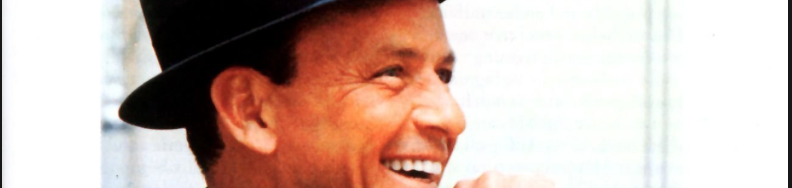
Come Swing With Me Cover

5 Sinatra Songs You Gotta Hear: “Day By Day”

5. “Day By Day” (click title to listen)
From Come Swing With Me! (Capitol, 1961)

Come Swing With Me! is one of Sinatra’s last proper albums for Capitol (not counting, of course, the cobbled-together leftover albums that the label dummied up after Frank had moved on). I actually am really indifferent to it as a whole.

The whole idea and push behind this album was much better realized a year later on Swing Along With Me!, which Capitol sued to have renamed to Sinatra Swings! for fear that people would mistake the titles and hurt Come Swing With Me! sales (Capitol probably could’ve helped this album’s cause by letting the similar moniker stick and using non-discerning customers’ mistake to their advantage).

Billy May was the conductor on both Come Swing With Me! and Swing Along With Me!. His arrangements gave Sinatra a hell of a platform to sing and swing on. But for most of Come Swing With Me!, Sinatra just sounds disengaged. Not necessarily to a distracting point—it’s just that if you listen to a lot of Frank and you know the subtext of the battle percolating between him and Capitol at the time, you can kind of hear some traces of “F*ck this sh*t” creeping in.

Compare the vocals on Come Swing With Me! to the gusto he sings with on Ring-a-Ding-Ding!, the album he delivered shortly later on his own label.

For all the faults of Come Swing With Me! though, it has “Day By Day,” which just might be one of the greatest album openers of all time. Sinatra’s fully engaged (it’s a pity it doesn’t last to the second track), and the arrangement is alive and exciting. Turn up that bass and take it in.

In an ideal world, he would’ve given the song another pass for Swing Along With Me!, where that album’s production would’ve brought even more oomph to the proceedings and given Frank good reason to dump that album’s only bit of dead weight, “Granada.”

But hey, “Day By Day” on a meh album is a million times better than no “Day By Day” at all.

This post was authored by Paul Snyder.
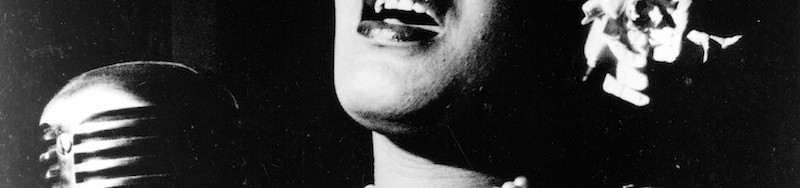
Billie Holiday singing

Billie Holiday

4.7.15

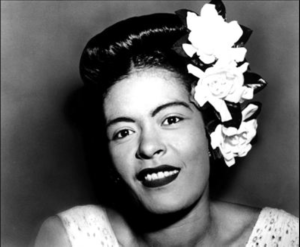
Billie HolidayThe legendary vocalist Billie Holiday was born 100 years ago today. Though a household name nowadays, she struggled to achieve the same notoriety as singers like Louis Armstrong and Ella Fitzgerald.

Strongly influenced by Armstrong and Bessie Smith, her style was a hit in Harlem. Mainstream audiences took a while to come around.

Early in her career, one Chicago club manager took her aside and told her she sang too slow, dragged the tempo and missed the beat. She offered to cut him a deal: “I’ll sing for free if you let me sing the way I sing.” He refused, and she walked.

As Holiday’s career began to take off, she found herself singing alongside some of the prominent Big Band leaders of the team — Teddy Wilson (1935-1938), Count Basie (late 1937), and Artie Shaw (1938).

~*~*~*~*~*~*~

Billie Holiday w/ Artie Shaw's Orchestra

Billie Holiday & Artie Shaw’s Orchestra

Like other black performers at the time, Holiday faced racial discrimination, often at the hands of stage managers, hotel owners and others who took issue with black singers mingling with white musicians. But her bandmates would be the first to stand up for her.

Billie Holiday once told singer Rosemary Clooney of a time when Holiday performed with Artie Shaw’s orchestra in Kentucky. There wasn’t a hotel in town willing to rent her a room.

“So Artie put eight of the boys around me and marched me into the lobby of the biggest hotel in town, like the ‘Queen Mary’ surrounded by tugboats. The clerk couldn’t imagine that a black woman would walk in like that with white men. He thought I was Spanish or something, so I got a nice room.”

~*~*~*~*~*~*~

Billie Holiday’s calm, laid-back vocal style masked a troubled story inside of her. Born to a 13-year-old mother, raised mostly by her grandmother, and jailed at a young age for prostitution, Billie Holiday first sang to make a living, not necessarily to pursue a passion.

The hardships that underlined many aspects of her life were evident in some of the songs she recorded– if not cloaking her voice as she sang, then illustrated in the lyrics of songs like “Strange Fruit” and “Gloomy Sunday.”

She struggled with an addiction to narcotics and ultimately succumbed to the effects of cirrhosis on July 17, 1959.

Her legacy lives on today as her recordings are remastered and re-released, and top hits like “God Bless the Child” and “What A Little Moonlight Can Do” are among the most-covered songs in her repertoire.

Tune into The Heavy Petting Zoo on Saturday, April 11 from 7:00-9:00 p.m. (Central)
for a special tribute to Billie Holiday.

Sources:
– BOOK: Girl Singer by Rosemary Clooney
– BOOK:Giants Of Jazz by Studs Terkel
– WEB: “Billie Holiday” – Wikipedia